Natural catastrophe insurance schemes in Europe compared
Six European countries, six different answers to the same question: when a flood or storm wrecks thousands of homes at once, who carries the bill, and who decides what gets paid?

| Country | Scheme | Founded | Perils | Compulsory? | Funding | State backstop | Latest figure |
|---|---|---|---|---|---|---|---|
| United Kingdom | Flood Re | 2014 (Act) / 2016 (launch) | Flood | No for households; levy compulsory for insurers | Insurer levy (£160m/yr) + band-based premiums from insurers + reinsurance | No | Claims paid £159.6m (year to 31 Mar 2025) |
| France | CatNat / CCR | 1982 | Flood, earthquake, drought subsidence, cyclones (overseas), etc. | Compulsory extension of every property policy | Flat surcharge 20% of property premium (from 2025); CCR reinsurance | Yes, unlimited State guarantee to CCR | CCR gross premiums €1,878m (2025) |
| Spain | Consorcio de Compensación de Seguros | 1941 / 1954 | Flood, earthquake, tsunami, volcanic, atypical cyclonic storm, meteorites + political/social risks | Compulsory surcharge on prescribed policies | Flat surcharge on sums insured (homes 0.07 per mille) + stabilisation reserve | Yes (never used) | Extraordinary-risk premiums/surcharges €860.4m (2025) |
| Norway | Norsk Naturskadepool (+ state naturskadeordning) | 1980 (pool); 2014/2017 state law | Storm, landslide, flood, storm surge, earthquake, volcanic eruption | Automatic with fire insurance | Uniform 0.08 per mille of fire sum insured; equalisation pool + reinsurance; state scheme budget-funded | No explicit guarantee found (state scheme only for uninsurable losses) | 2025 claims about NOK 2.948bn |
| Switzerland | KGV (19 cantons) + private ES-Pool | 1953 (private bundling); ES-Pool 1936 | 9 perils: flood, high water, storm, hail, avalanche, snow pressure, rockfall, falling stones, landslide (no earthquake) | Yes (KGV monopoly; bundled with private fire cover) | Cantonal monopolies; private uniform FINMA tariff + pool + reinsurance | No | ES-Pool insured claims about CHF 300m (2024) |
| Germany | Elementarschadenversicherung (voluntary) | No single date | Heavy rain, river flood, backwater, other elemental perils | No (opt-out model planned, bill expected Q1 2027) | Private risk-based premiums | No standing backstop; ad-hoc aid | Elemental losses about €400m (2025); density 57% (2024) |
| Austria | Katastrophenfonds | 1966 (current law 1996) | Natural disasters incl. floods, avalanches, storms, landslides, hail | No insurance obligation | Share of income and corporate tax revenue; discretionary aid via Länder | It is the state fund | Disbursements €440.97m (2023) |
Two houses flood on the same night, one in Lyon and one in Valencia. The owner in Lyon waits for a ministerial decree before the claim can even start. The owner in Valencia files straight away, because Spain stopped requiring a disaster declaration in 1986. Both have ordinary home insurance, both paid a small compulsory surcharge on it, and both are protected in the end. The route to the money is completely different.
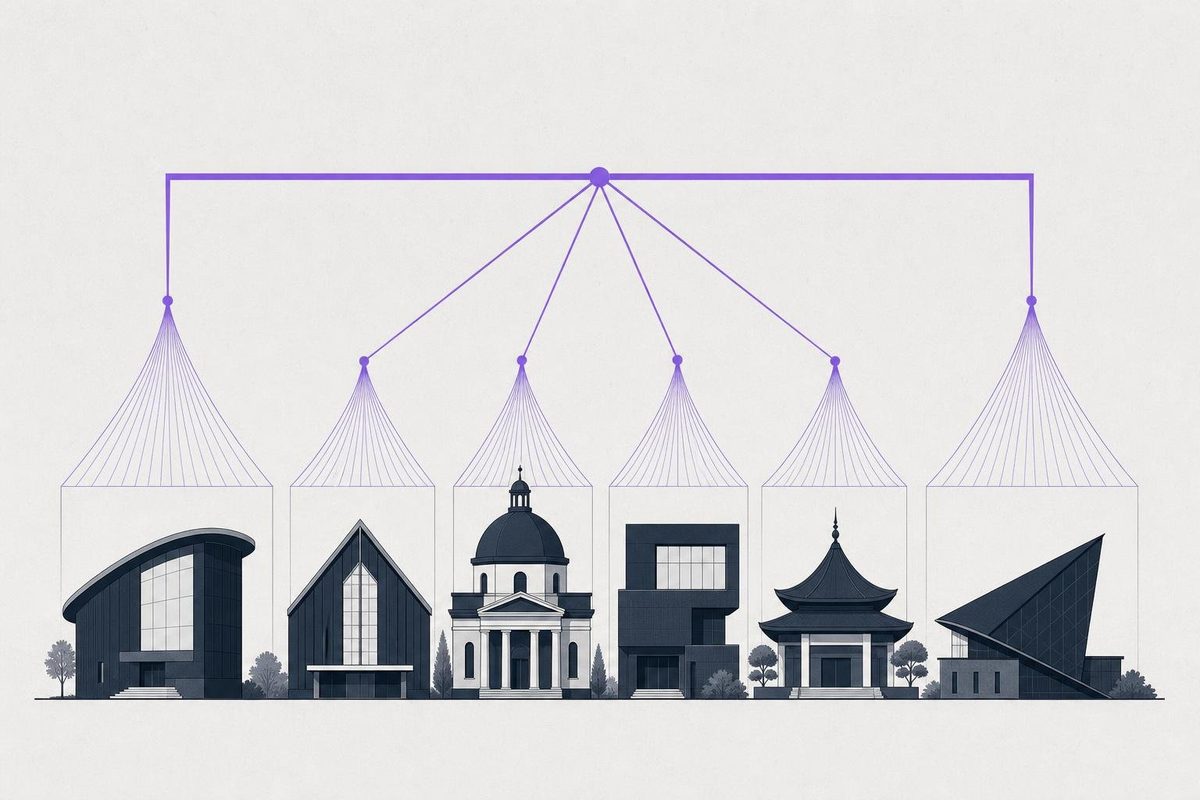
That gap in procedure is the most visible part of a deeper split. European countries made their choices about natural catastrophe insurance at different moments, after different disasters, and with different views on how far the state should stand behind private insurers. The table above sets the six systems side by side. What follows explains the logic behind them.
The scale of the problem is not in dispute. In an April 2026 speech, EIOPA, the EU insurance supervisor, said that only about 25% of natural catastrophe losses in the EU have been insured over recent decades. The rest has fallen on households, businesses, municipalities and national budgets, which is the subject of the protection gap analysis elsewhere on Enhance Project.
Four ways to pay for a catastrophe
Almost every European system is a variation on one of four designs. They differ on two questions: is cover compulsory, and does the state carry the extreme losses?
- State-backed reinsurance with compulsory cover. Private insurers sell the policy, a mandatory extension adds catastrophe cover, and a public reinsurer with a state guarantee takes the tail. France is the clearest case.
- Public insurer. A public body provides the catastrophe cover itself and pays the claims. Spain’s Consorcio de Compensación de Seguros and the cantonal building insurers in 19 Swiss cantons work this way.
- Mandatory pool. Every insurer that sells a base policy must include catastrophe cover and share the losses through a common pool. Norway and the private side of the Swiss market follow this model.
- Voluntary private market plus ad-hoc aid. Cover is optional and priced by risk, and the state steps in after big events with money voted at the time. Germany and Austria are the main examples among the six countries covered here.
The United Kingdom’s Flood Re does not fit neatly. It is a reinsurer, like France’s CCR, but the insurance industry funds it and the state does not guarantee it, it covers only flood, only homes, and only until 2039. It is best read as a targeted, temporary version of the first model with the state guarantee removed.
State-backed reinsurance and compulsory cover
France’s régime des catastrophes naturelles dates from a law of 13 July 1982. Every policy that insures property against damage must include CatNat cover, and the price of that extension is fixed by the state as a percentage of the base premium. From 1 January 2025 that surcharge is 20% for homes and business property, up from 12%, under arrêtés published by the Ministry of the Economy on 28 December 2023.
Insurers can pass part of the risk to the Caisse Centrale de Réassurance (CCR), a state-owned reinsurer. CCR carries an unlimited State guarantee. The French Senate’s finance committee noted in May 2024 that this guarantee had been called only once, in 2000, after the storms Lothar and Martin.
The design spreads the cost of floods, earthquakes and drought subsidence across every policyholder in the country at the same rate. The price is a dependence on political decisions: the state sets the rate, recognises each catastrophe by decree, and stands behind the reinsurer.
Public insurers
Spain went further. The Consorcio de Compensación de Seguros pays the claims for “extraordinary risks” itself, financed by a surcharge that every policy in the prescribed lines must carry. Homes pay 0.07‰ of the sum insured, a flat national tariff set in a 2018 Resolution of the Directorate-General for Insurance. The Consorcio holds a stabilisation reserve, which stood at €7,518.7m available at the end of 2025 according to its annual report, and has a State guarantee behind it that has never been used.
In Switzerland, the public insurer is local. In 19 cantons a cantonal building insurer, or KGV, holds a monopoly on insuring buildings against fire and natural hazards. According to their association, the VKG, these institutions insure 2.3 million buildings, about 85% of the country’s building stock.
Public insurers have one advantage that is easy to overlook: there is no argument about whether the private insurer or the scheme should pay. The body that collects the surcharge also handles the claim.
Mandatory pools
A pool keeps the insurance private but removes the choice. Norway’s Natural Perils Pool, in operation since 1 January 1980, requires every company selling fire insurance to be a member, and every fire policy automatically includes natural-perils cover. The premium is a uniform 0.08‰ of the fire sum insured for 2025 and 2026, the same for a fjord-side cabin and a city flat. Members share claims by market share and buy reinsurance together.
The Swiss private market works the same way in the seven cantons without a KGV, and for contents almost everywhere. Insurers must include nine natural perils in fire cover, charge a single tariff set by the supervisor FINMA, and share 80% of claims through the Elementarschadenpool, keeping 20% each.
Voluntary cover and ad-hoc aid
Germany has no catastrophe scheme. Elemental damage cover, which protects against heavy rain, river flooding and backwater, is an optional add-on to building insurance. The industry association GDV counted 57% of homes with that cover in 2024. After the July 2021 floods the federal government set up a reconstruction fund of up to €30bn, which shows the other half of this model: when cover is voluntary, the state pays after the event.
Austria relies even more on public money. Its Katastrophenfonds, funded from a share of income and corporate tax, pays discretionary aid through the federal states. The Austrian Court of Audit found in October 2025 that only about 5% of the values of households and businesses are insured against flood.
The six schemes one by one
Flood Re (United Kingdom)
Flood Re was created by Part 4 of the Water Act 2014 and launched on 4 April 2016. Insurers can pass the flood element of eligible home policies to Flood Re at a premium set by Council Tax band, so homeowners in high-risk areas can find affordable cover. Every UK home insurer pays an annual levy, £160m from April 2025. Only homes built before 1 January 2009 qualify. The full mechanics, the eligibility rules, the Build Back Better grants and the 2039 exit plan are on the Flood Re scheme page.
CatNat and CCR (France)
The CatNat regime covers floods, earthquakes, overseas cyclones and clay shrink-swell subsidence caused by drought, which has become its largest cost driver. Storm and hail are left out because ordinary policies already cover them. A claim needs an inter-ministerial decree for the commune. The CatNat page covers the decree process, the deductibles and the Senate’s 2024 criticisms.
Consorcio de Compensación de Seguros (Spain)
Founded provisionally in 1941 and made permanent in 1954, the Consorcio covers earthquake, flood, tsunami, volcanic eruption, atypical cyclonic storms and meteorites, plus terrorism and riot. The October 2024 DANA floods in Valencia were the worst event in its history. Payouts, reserves and the take-up problem are set out on the Consorcio page.
Norwegian Natural Perils Pool
Norway runs two separate arrangements: the industry pool for anything insured against fire, and a state scheme for things that cannot be insured, such as roads, bridges and farmland. The distinction matters after every landslide. The Norway page explains both.
Swiss cantonal building insurers and the Elementarschadenpool
More than 95% of Swiss buildings and contents are insured against natural hazards, according to the Swiss Insurance Association (SVV). Earthquake is the exception: only 21% of building values are insured against it, and on 30 September 2026 the National Council rejected a federal plan to change that. The Switzerland page covers the cantonal monopolies, the pool and the earthquake vote.
Germany and Austria
Neither country has compulsory cover, and both are debating it. In Germany, Justice Minister Hubig said on 28 September 2026 that a framework paper for an opt-out model was finished. In Austria, the Court of Audit has recommended an insurance model, citing France and Switzerland. The Germany and Austria page follows both debates.
What the choice of model changes
The models are not neutral technical options. Each one picks winners.
A flat compulsory surcharge, as in France, Spain and Norway, means that a household on a hilltop pays the same rate as one on a floodplain. Supporters call that solidarity. Critics, including the French Senate’s 2024 report and a Norges Bank staff memo from January 2026, say it removes any price signal that would reward a household for reducing its own risk.
Risk-based voluntary cover, as in Germany, sends a clear price signal but leaves the most exposed homes either uninsured or facing premiums they cannot pay. The German debate has turned on exactly this point, and the state ends up paying anyway after a major flood.
The UK chose a third path: keep risk-based pricing in the ordinary market, but cap what high-risk homes pay for the flood element until 2039, funded by every other policyholder through the levy. Whether the market will be ready to price those homes on its own by then is the question Flood Re’s own board has raised.
A side-by-side reading of compulsion, pricing, tail risk, claims triggers and payment speed is on the comparison page, with worked examples for the same flooded house in three countries.
One detail rarely appears in comparisons. Every one of the compulsory schemes depends on the homeowner first buying an ordinary policy. In Spain, where the surcharge model has worked well for decades, Consorcio cover still reaches only homes that carry insurance in the first place, and UNESPA data reported by elDiario.es put the share of Spanish homes with insurance at 80.8%. For the other 19.2%, the best-designed surcharge in Europe offers nothing at all.
The same is true in France, where CatNat cover is attached to property policies, not to properties, and in Norway, where the pool follows fire insurance. Compulsion in European catastrophe schemes almost always means compulsion for the insurer, not for the owner. That is a political choice, and it is the reason the uninsured household remains the hardest case in every model.
Sources
- Insurance protection gaps in a changing climate (speech, Petra Hielkema), EIOPA (2026-04-16)
- Flood Re Limited Annual report and accounts 2025-2026 (HC 334), Flood Re Ltd / GOV.UK (2026-06-30)
- How is Flood Re funded?, Flood Re (undated)
- Publication des arrêtés renforçant les moyens d'action du régime d'indemnisation des catastrophes naturelles, Ministère de l'Économie et des Finances (2023-12-28)
- L'essentiel sur le contrôle budgétaire du régime d'indemnisation des catastrophes naturelles (rapport Lavarde), Sénat, commission des finances (2024-05-15)
- Resolución de 28 de marzo de 2018, recargos en favor del CCS (texto consolidado), BOE (2018-03-28)
- Informe Anual 2025, Consorcio de Compensación de Seguros (2026)
- Annual Report 2025, Norwegian Natural Perils Pool, Norsk Naturskadepool (2026)
- Erfolgsrezept KGV, VKG (undated)
- Die Elementarschadenversicherung: Weltweit einzigartig, Schweizerischer Versicherungsverband SVV (2024-10)
- Erdbebenversicherung: SVV setzt sich gegen Bundeslösung durch, finews.ch (2026-09-30)
- Versicherungsquote bei Elementarschadenversicherung steigt kontinuierlich, GDV (2025-10-10)
- Bundesregierung stellt Weichen für mehr Elementarschutz, GDV (2026-09-28)
- Bericht der Bund-Länder-Arbeitsgruppe zu Elementarrisiken, Bundesministerium der Justiz (2025-02-21)
- La vivienda en España ante los incendios: cuatro de cada 10 casas no tienen seguro en una decena de provincias (UNESPA data), elDiario.es (undated)
- Extremwetterschäden: Rechnungshof für strengere Baubeschränkungen in Gefahrenzonen, Rechnungshof Österreich (2025-10-10)
Frequently asked questions
Which European countries have compulsory natural catastrophe insurance?
France bundles CatNat cover into every property policy, Spain charges a compulsory Consorcio surcharge on prescribed policies, Norway attaches natural-perils cover to all fire insurance, and Switzerland requires building cover in most cantons. In each case the compulsion rides on an ordinary policy. Nobody is forced to buy home insurance itself, which is why uninsured homes remain outside every one of these schemes.
Does the UK have a state flood insurance scheme?
Not in the sense of a state insurer. Flood Re is a reinsurer created under the Water Act 2014 and funded by a levy on home insurers. It has no taxpayer guarantee: if claims passed its £3.2bn Liability Limit, the insurers would remain liable. It covers eligible homes built before 2009 and is designed to close in 2039.
Why does Germany not have mandatory flood insurance?
Successive governments have weighed it and stopped short. A joint federal and Länder working group reported in February 2025 that the two levels disagreed on whether a true mandate would be constitutional. In September 2026 the Justice Minister announced an opt-out model instead, with a draft bill expected in the first quarter of 2027.
What is the difference between a public insurer and a state guarantee?
A public insurer, such as Spain's Consorcio or a Swiss cantonal building insurer, sells or provides the cover itself and pays claims directly. A state guarantee sits further back: France's CCR reinsures private insurers, and the State promises to cover CCR if its resources run out. The first changes who handles a claim; the second changes who absorbs an extreme year.
Are earthquakes covered by these schemes?
It depends on the country. Spain's Consorcio, France's CatNat regime and Norway's pool all include earthquake. Switzerland's nine-peril system leaves it out, and in September 2026 the National Council rejected a federal plan to fill the gap. Flood Re covers flood only, and German elemental cover is an optional add-on.